How to Learn Piano as an Adult: Realistic Expectations and a Daily Plan
We may earn a commission from links on this page, at no extra cost to you. Disclosure
Quick answer
It is not too late to learn piano at 40, 50, 60 or older; adults usually understand music faster than children, even if their fingers start slower. Practice 15 to 20 minutes on most days, learn a few chords and simple rhythms first, and add note reading gradually. Expect simple songs within the first months and comfortable two-hand playing to take longer; timing varies by person.
Quick answer: You can learn piano as an adult at any age, and 15 to 20 minutes of focused practice most days is enough to make steady progress. Most adults move fastest by learning a few chords and simple rhythms first, then adding note reading over time. Expect your fingers to feel slow for the first few weeks. That is normal coordination work, not a sign you started too late.
Is it too late to learn piano at 40, 50 or 60?
No. There is no age cutoff for learning piano. Adults in their 40s, 50s, 60s and beyond start every year and go on to play songs they enjoy. What changes with age is the route, not the possibility.
Children often learn finger movements more quickly. Adults usually understand music faster: why a chord sounds happy or sad, how a song is built, and what to practice next. That understanding makes up for a lot of the speed difference.
Here is how the starting point typically looks by decade. These are general patterns, not rules, and every learner is different.
| Starting age | Common advantage | Common challenge | Helpful tip |
|---|---|---|---|
| 40s | Clear goals, steady routine | Busy weeks with work and family | Anchor practice to a daily habit, like after dinner |
| 50s | Patience and good listening | Stiffer fingers on cold mornings | Warm up hands for 2 minutes before playing |
| 60s and up | More free time, no pressure | Slower recall of new shapes | Short sessions twice a day beat one long one |
If you feel pain in your hands, wrists or shoulders while playing, stop and see a doctor. Mild tiredness in new muscles is common; pain is not something to push through.
Realistic expectations for your first year
In year one, most adults go from zero to playing simple songs with both hands, at a slow and steady pace. The exact timing depends on how often you practice and which route you choose. The ranges below are typical with 15 to 20 minutes on most days. They vary a lot from person to person.
| Stage | What it looks like | Typical timing (varies) |
|---|---|---|
| Find your way around | Know where C, F and G are; play basic chords | First few weeks |
| First simple song | Chords in the left hand or both hands, slow tempo | Several weeks to a few months |
| Hands together | Melody in the right hand over a simple left-hand pattern | A few months to about a year |
| Playing for others | A handful of songs you can play without stopping | Often within the first year or two |
For a deeper breakdown by practice time and goal, see our guide on how long it takes to learn piano.
Want a chords-first path? Pianoforall teaches chords and rhythm before note reading, as 10 ebooks with embedded video and audio ($49 one-time, 60-day refund window, checked October 13, 2026).
See what's inside →Paid link · opens the vendor's sales page.
The advantages adults have
Adult beginners bring skills that kids do not have yet. Use them on purpose and practice gets more efficient.
- You know what you want to play. A clear goal, like ballads or blues, lets you skip material you do not need.
- You can understand theory quickly. One explanation of how a major chord is built can unlock dozens of chords.
- You choose to be there. Nobody is forcing practice, so motivation comes from enjoyment.
- You may already play something. Guitar players already know chord names and progressions; singers already hear melody and rhythm.
A 15 to 20 minute daily practice plan
A short plan you repeat most days beats a long session once a week. Split your time into small blocks so every session touches chords, rhythm and a song.
| Minutes | Block | What to do |
|---|---|---|
| 0–2 | Warm-up | Open and close your hands; play five notes up and down with each hand, slowly |
| 2–7 | Chords | Move between two or three chords (for example C, F and G) until the change feels smooth |
| 7–11 | Rhythm | Play one chord pattern with a steady beat; use a metronome at a slow tempo |
| 11–17 | Song | Work on 2 to 4 bars of one song you like; repeat until they are easy |
| 17–20 | Free play | Play something you already know, just for fun |
Practice 5 or 6 days a week and take a rest day. If you miss a day, simply pick up where you left off. Our post on your first three piano chords shows the C, F and G shapes step by step.
Prefer a set sequence? Pianoforall lays out the order for you: party-style rhythms, then blues, chord inversions, ballads, jazz and classical. About 300 video lessons, according to the vendor.
See the lesson order →Paid link · opens the vendor's sales page.
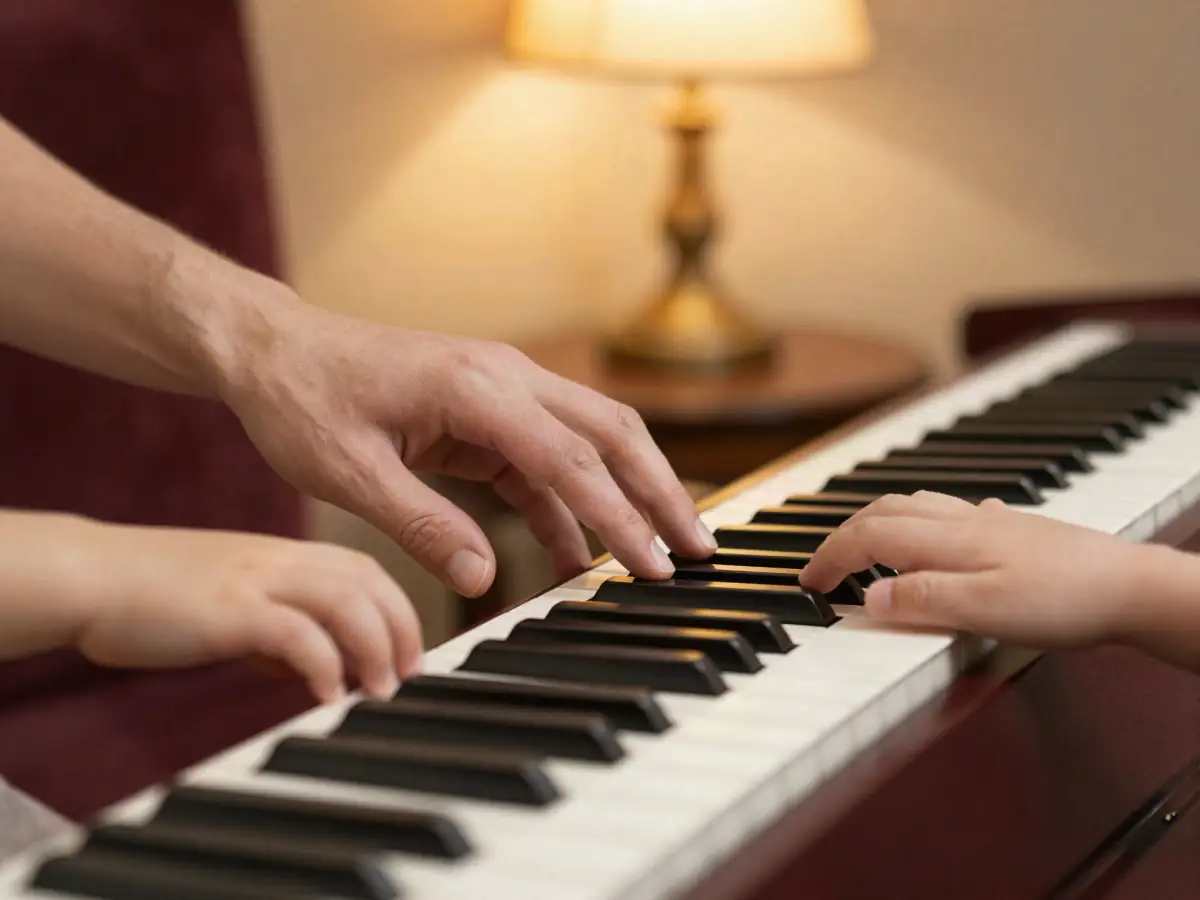
Chords-first or the classical route?
Pick the route that matches the music you want to play. Both are valid. They just reach different goals at different speeds.
The chords-first route teaches common chords and rhythm patterns so you can play pop, rock, blues and ballads from a chord chart early on. The classical route starts with reading notes on the staff, one hand at a time, and builds toward written pieces.
| Chords-first | Classical (reading-first) | |
|---|---|---|
| First weeks | Chord shapes and simple rhythms | Note names, staff, single-hand pieces |
| Feels like music early? | Usually yes | Slower at first |
| Best for | Pop, blues, worship, accompanying singing | Classical pieces, exams, ensembles |
| Main weakness | Reading skills come later | Can feel dry for adults who want songs |
Many adults combine them: chords first for quick wins, then reading added a little each week. Our guide on piano by ear vs reading music covers that hybrid path in detail.
What you need to start
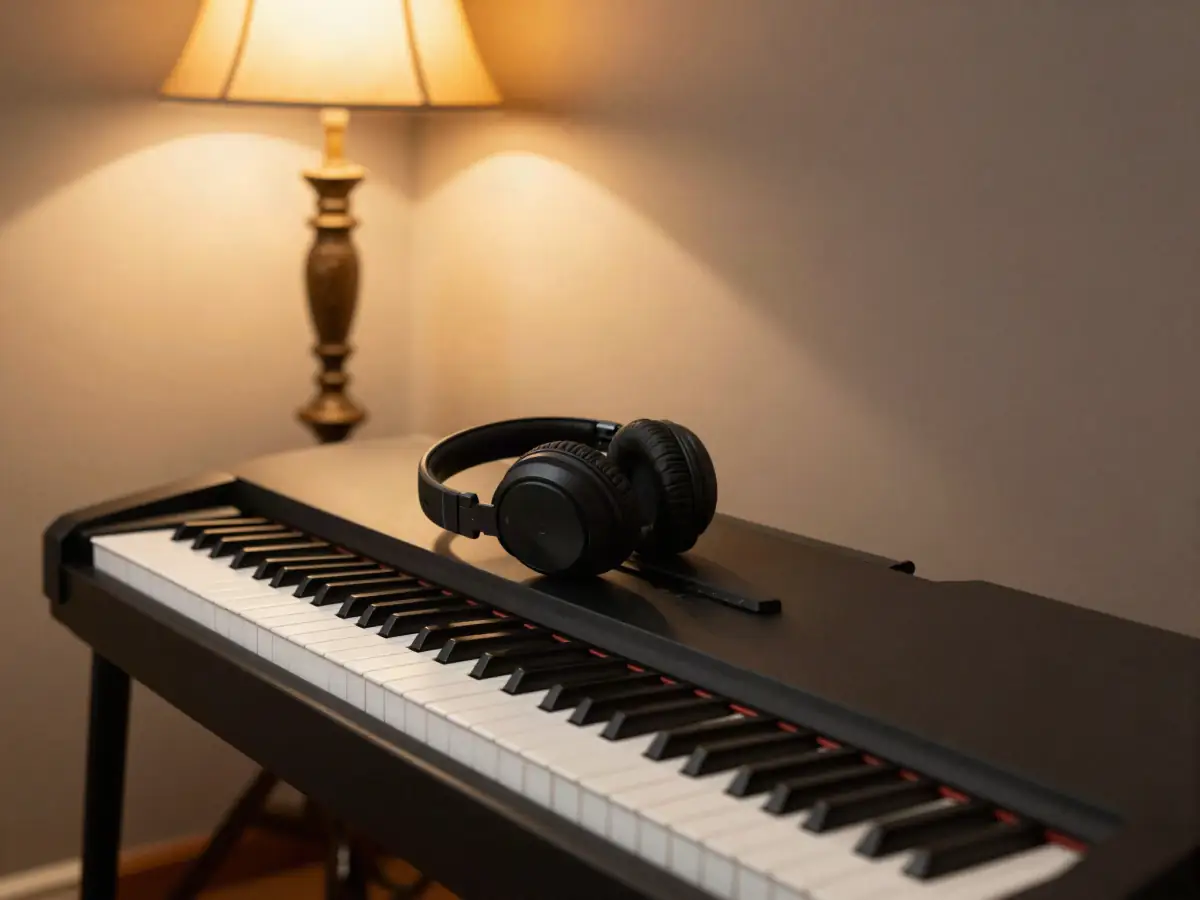
You need a keyboard with touch-sensitive keys, a sustain pedal and a headphone jack. Headphones let you practice at night without worrying about family or neighbors, which removes a big excuse to skip practice.
An 88-key digital piano with weighted keys is ideal. A 61-key touch-sensitive keyboard is fine for a chords-first start on a tight budget. See our guide to the best cheap keyboard for beginners for a feature checklist and price ranges.
Your options for lessons, and what they cost
The main choices are a private teacher, an app, a video course or a method book. Prices below were checked on vendor pages as of October 13, 2026 and can change; "varies" means we could not verify one fixed price.
| Option | Typical cost | Feedback on your playing | Good for |
|---|---|---|---|
| Private teacher | Varies by city and teacher; ask locally | Live, personal | Fixing technique, accountability |
| Apps (Flowkey, Piano Marvel, Simply Piano) | Flowkey $99.99–$149.99/yr; Piano Marvel $129.99/yr; Simply Piano varies, check the app store | Note detection by mic or MIDI | Reading practice, gamified motivation |
| Playground Sessions | $149.99/yr or $349.99 one-time | MIDI note detection | Structured reading course |
| Video courses (Pianoforall, Pianote) | Pianoforall $49 one-time; Pianote $229–$279/yr | None (Pianoforall); coaches and community (Pianote) | Chords, styles, self-paced learning |
| Method books | Varies by book and retailer | None | Low-cost reading foundation |
For a fuller comparison, read the best online piano courses for adults or our head-to-head of Pianoforall vs Flowkey.
One payment, no subscription. Pianoforall costs $49 once at checkout and comes with a 60-day money-back window handled by the vendor or ClickBank (checked October 13, 2026).
Check the current price →Paid link · opens the vendor's sales page.
Common mistakes adult beginners make
Most adults who stall do so because of routine, not talent. Watch for these habits in your first months.
| Mistake | Better approach |
|---|---|
| Practicing too fast | Play slowly enough to make no mistakes, then speed up a little |
| Always starting a song from the top | Isolate the 2 hard bars and loop them |
| Long weekend sessions only | Short daily sessions; the brain consolidates between them |
| Jumping between many apps and videos | Follow one sequence for at least a few months |
| No way to hear yourself | Record a short clip on your phone each week and compare |
Recording yourself matters most if you learn without a teacher, because nobody else will catch tense wrists or uneven rhythm. Our post on why adults quit piano covers motivation in more depth.
Where Pianoforall fits
If you want the chords-first route at a low one-time price, Pianoforall by Robin Hall is one option. It has been sold since 2006, according to the vendor, and works offline on Windows, Mac, iOS and Android. The honest trade-offs: there is no live teacher feedback, no note detection, and the video production looks dated. Reading music is covered later and more lightly than in a reading-focused app. Our full Pianoforall review covers what is inside and who it suits.
Ready to start? See the 10 ebooks, the lesson order and the 60-day refund terms on the vendor's page.
See Pianoforall →Paid link · opens the vendor's sales page.
Frequently asked questions
Is it too late to learn piano at 40?
No. Many adults start in their 40s and learn to play songs they enjoy. A clear goal and 15 to 20 minutes of practice on most days matter more than starting age.
Can you learn piano at 50 or 60?
Yes. Fingers may feel stiffer and new hand shapes can take more repetitions, but adults in their 50s, 60s and older learn piano every year. Short sessions, sometimes twice a day, work well. If you feel pain while playing, stop and see a doctor.
How many minutes a day should an adult beginner practice piano?
About 15 to 20 minutes on 5 or 6 days a week is a solid start. Split the time into a short warm-up, chords, rhythm and one song so every session covers the basics.
Should adults learn chords first or read music first?
If you want to play pop, blues, worship or accompany singing, start with chords and add reading later. If you want classical pieces or exams, start with reading. Many adults combine both.
Can I learn piano as an adult without a teacher?
Yes, many adults learn with apps, video courses or books. The main risk is building bad habits without feedback, so record yourself regularly and consider an occasional lesson with a teacher.
What keyboard does an adult beginner need?
Ideally an 88-key digital piano with weighted keys, a sustain pedal input and a headphone jack. A 61-key touch-sensitive keyboard is a workable start on a tight budget.