Play Your First 3 Chords Tonight (C, F, G) in 15 Minutes
Quick answer
C major is C-E-G, F major is F-A-C and G major is G-B-D, each played with right-hand fingers 1-3-5. To move smoothly, play C, then F/C (C-F-A), then G/B (B-D-G), add the chord's name as a low left-hand note, and give each chord four steady beats. That I-IV-V pattern is behind songs like Twist and Shout, La Bamba and most 12-bar blues.
We may earn a commission from links on this page, at no extra cost to you. Disclosure
You do not need to read music to play something that sounds like a real song tonight. Three chords, C, F and G, are behind a huge number of folk, rock, country and pop songs. In 15 minutes you can find them, play them with smooth hand movements, add a left-hand bass note and keep a steady rhythm. All you need is a keyboard or piano and this page.
Step 1: Find middle C (2 minutes)
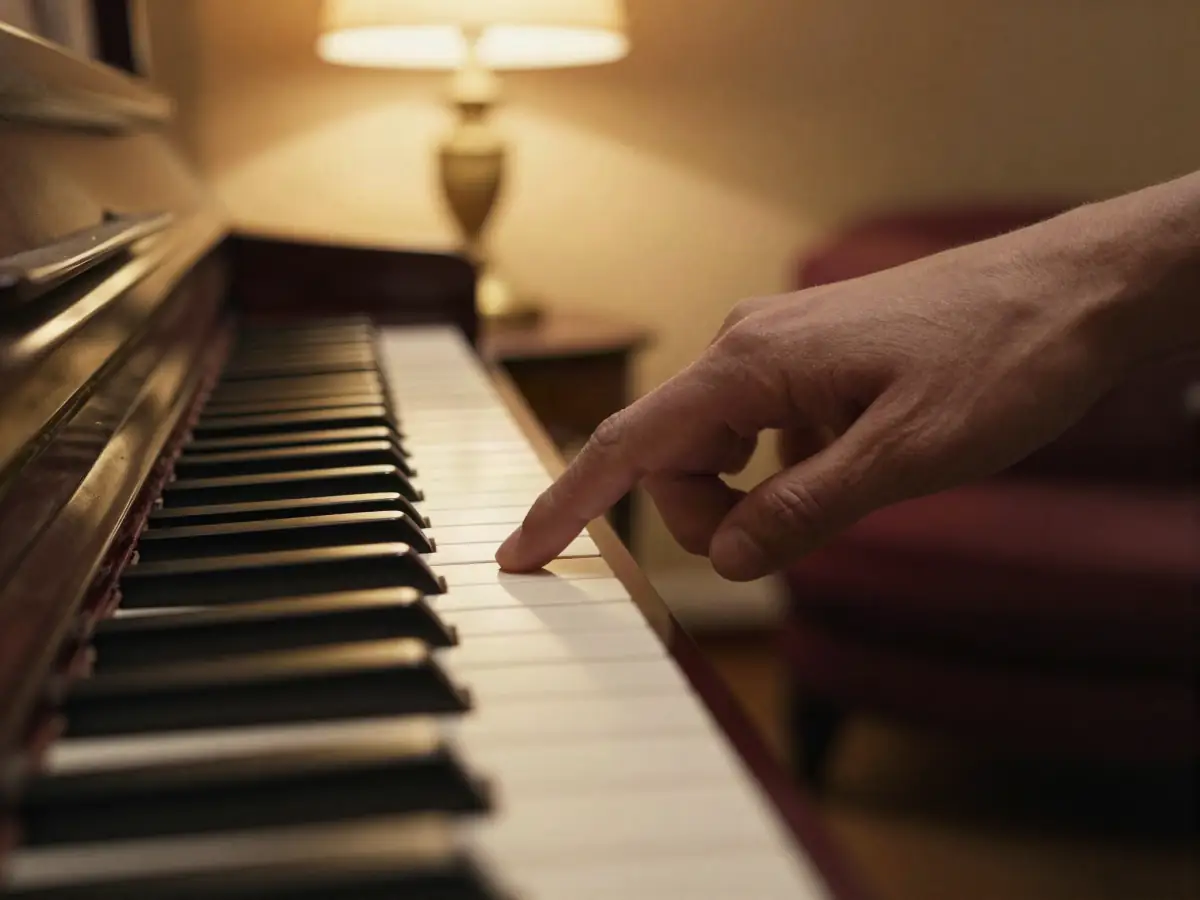
C is always the white key just to the left of a group of two black keys, and middle C is the C closest to the center of your keyboard.
Look at the black keys. They come in groups of two and three. Every white key directly left of a group of two is a C. On most keyboards, middle C sits roughly under the brand name or in the middle of the keys. Sit so middle C is in line with your belly button.
From C, the white keys go C, D, E, F, G, A, B, then C again. That is all the note naming you need today.
Step 2: Learn your finger numbers
Pianists number fingers 1 to 5 starting from the thumb, on both hands.
| Finger | Number |
|---|---|
| Thumb | 1 |
| Index | 2 |
| Middle | 3 |
| Ring | 4 |
| Pinky | 5 |
Keep your hand relaxed and curved, as if holding a small ball. Wrists stay level with the keys, not drooping. If anything hurts, stop and see a doctor.
Step 3: Play C, F and G in root position (3 minutes)
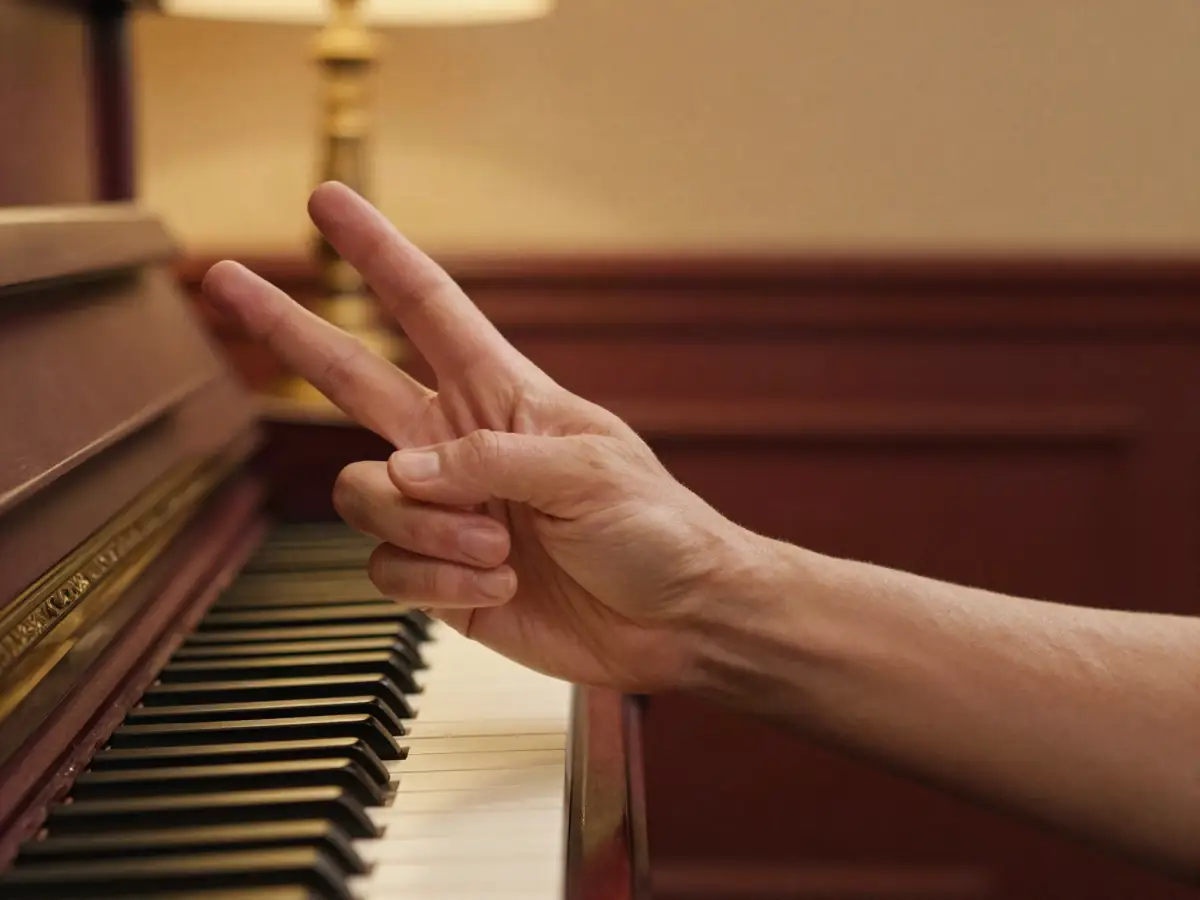
Each chord is three white keys with one key skipped between each: play-skip-play-skip-play, using fingers 1, 3 and 5.
- C major: C-E-G. Thumb on middle C, middle finger on E, pinky on G.
- F major: F-A-C. Thumb on the F above middle C, then A and C.
- G major: G-B-D. Thumb on G, then B and D.
Press all three keys at once, firmly but gently. Hold for a slow count of four, lift, and play again. Then try each chord in turn.
| Chord | Notes | Right-hand fingers | Shape on the keys |
|---|---|---|---|
| C | C - E - G | 1 - 3 - 5 | C . E . G (skip D and F) |
| F | F - A - C | 1 - 3 - 5 | F . A . C (skip G and B) |
| G | G - B - D | 1 - 3 - 5 | G . B . D (skip A and C) |
You will notice your hand jumps across the keyboard to move from C to F to G. That jump is what makes beginners sound choppy. The next step fixes it.
Like learning by chords instead of sheet music? Pianoforall builds a full course on this approach: $49 one-time on October 13, 2026.
See the chords-first course →Paid link · opens the vendor's sales page.
Step 4: Smooth it out with inversions (3 minutes)
An inversion uses the same three notes in a different order, so your hand barely moves between chords.
Keep C as it is. For F, play C-F-A (called F/C). For G, play B-D-G (called G/B), with the B just below middle C. Now your hand stays in one spot and only a finger or two moves each time.
| Chord | Notes (low to high) | Right-hand fingers | What moves from C |
|---|---|---|---|
| C | C - E - G | 1 - 3 - 5 | Starting shape |
| F/C | C - F - A | 1 - 3 - 5 | C stays; E up to F, G up to A |
| G/B | B - D - G | 1 - 2 - 5 | C down to B, E down to D; G stays |
Move slowly: C, then F/C, back to C, then G/B, back to C. Watch which fingers stay still. After a few rounds you will feel the shapes rather than think them. This one trick is what makes chord playing sound smooth instead of jumpy.
Step 5: Add the left hand (2 minutes)
Your left hand plays one note: the chord's name, about an octave below middle C.
For C, play the C below middle C. For F, play the F just above that low C. For G, play the G next to it. Use your pinky (5) or any comfortable finger. Play the bass note at the start of each chord and let it ring while your right hand plays the chord. This single low note makes three keys sound like a full band.
Step 6: A 4-chord rhythm (3 minutes)
Loop C, F, G, C, giving each chord four steady beats. Count out loud "1, 2, 3, 4" for each chord.
| Bar | Chord | Left hand | Right hand |
|---|---|---|---|
| 1 | C | C on beat 1 | C-E-G on beats 1, 2, 3, 4 |
| 2 | F/C | F on beat 1 | C-F-A on beats 1, 2, 3, 4 |
| 3 | G/B | G on beat 1 | B-D-G on beats 1, 2, 3, 4 |
| 4 | C | C on beat 1 | C-E-G on beats 1, 2, 3, 4 |
Once that feels steady, try a "strum" pattern: right hand on beats 1, 2 and the "and" after 2, then 3 and 4 ("1, 2-and, 3, 4"). A slow, even beat matters more than speed. If you lose the rhythm, stay on one chord until it settles.
Ready for rhythm styles, blues and ballads built on these shapes? $49 one-time, 60-day refund (October 13, 2026).
Get the full rhythm system →Paid link · opens the vendor's sales page.
Your 15-minute practice plan, minute by minute
Set a timer and follow this once tonight; repeat it for a few days before adding anything new.
- Minutes 0 to 2: find every C on the keyboard, then middle C. Say finger numbers out loud.
- Minutes 2 to 5: C, F and G in root position, four slow beats each.
- Minutes 5 to 8: switch C to F/C and back, ten times. Then C to G/B and back.
- Minutes 8 to 10: add left-hand bass notes, one per chord.
- Minutes 10 to 13: loop C, F/C, G/B, C with four beats each.
- Minutes 13 to 15: try the "1, 2-and, 3, 4" rhythm, then stop while it is still fun.
Songs that use these three chords
Chords built on the 1st, 4th and 5th notes of a scale (called I, IV and V) power countless well-known songs. In the key of C, those are exactly C, F and G. A few to look up as chord charts:
- "Twist and Shout"
- "La Bamba"
- "Louie Louie"
- "Wild Thing"
- "Johnny B. Goode" and most 12-bar blues
- "Amazing Grace"
- "Happy Birthday"
Recordings are often in other keys. Search for the chord chart "in C," or use the same shapes starting on different notes later. The pattern of movement stays the same, which is why learning chords transfers to so many songs.
Common mistakes and quick fixes
- Notes sound uneven: press all three together with the same weight. Slow down.
- Hand tenses up: drop your shoulders, shake out your hand, keep fingers curved.
- Losing the beat on chord changes: look at the next chord one beat early.
- Wrong keys: find C again by the group of two black keys and rebuild the shape.
Where to go next
Next steps are a fourth chord (A minor: A-C-E), new rhythms and both hands working more independently. Add A minor and you can play C, A minor, F, G, one of the most common progressions in pop music.
For a full plan, read how to learn piano as an adult and piano by ear vs reading music. Need a keyboard first? See the best cheap keyboard for beginners. If you stopped playing before, why adults quit piano explains the usual traps.
For the full system: Pianoforall
Pianoforall is a course built on exactly this method: chords and rhythm first, then styles, then reading. It was $49 one-time at checkout on October 13, 2026, with a 60-day money-back window. It comes as 10 ebooks with embedded video and audio, and the vendor says it has about 300 video lessons and 25+ hours of video. The course opens with party-style rhythm piano built on chords. Later books cover blues, inversions, ballads, jazz and classical.
Honest limits: there is no feedback on your playing, and the videos look dated. Our full Pianoforall review and is Pianoforall worth it cover the details. A free "Test Drive" at academy.pianoforall.com needs no card.
You just played three chords. Pianoforall turns them into rhythm styles, blues, ballads and jazz. Research-based pick, not a hands-on test.
Continue with Pianoforall →Paid link · opens the vendor's sales page.
Frequently asked questions
What are the notes in C, F and G chords?
C major is C-E-G, F major is F-A-C and G major is G-B-D. Each is three white keys with one key skipped between each.
Which fingers do I use for piano chords?
In root position use right-hand fingers 1, 3 and 5 (thumb, middle, pinky). For G/B (B-D-G), fingers 1, 2 and 5 feel natural.
How do I find middle C?
C is the white key just left of any group of two black keys. Middle C is the C nearest the center of the keyboard, roughly in line with your body.
What is a chord inversion?
The same notes in a different order. F/C is C-F-A and G/B is B-D-G. Inversions keep your hand in one place so chord changes sound smooth.
What songs can I play with C, F and G?
Many songs use the I-IV-V chords, including Twist and Shout, La Bamba, Louie Louie, Wild Thing, Amazing Grace, Happy Birthday and most 12-bar blues. Look for chord charts in C.
How long should I practice chords as a beginner?
About 15 minutes most days works well. Use the minute-by-minute plan, keep the beat slow and steady, and stop if your hands hurt.
More from the blog
Best 5 Online Piano Courses for Adults in 2026
Pianoforall, Pianote, Playground Sessions, Flowkey and Piano Marvel compared on 1-year cost, refunds, by-ear vs reading and devices. Prices Oct 13, 2026.

Is Pianoforall Worth It? An Honest Buyer's Guide for 2026
Is Pianoforall worth $49? Objections (dated look, no feedback, ebooks, Academy move), price math vs subscriptions, who should skip it, refund steps.
Pianoforall vs Playground Sessions: Which Should You Pick?
Pianoforall ($49 one-time, chords first) vs Playground Sessions ($149.99/yr or $349.99 lifetime, MIDI feedback): price, refund, devices, verdict.