Am I Too Old to Learn Piano? Honest Answers at 50, 60 and 70+
Quick answer
No one is too old to learn piano. Age changes the pace, not the possibility: adults in their 50s, 60s and 70s can learn chords, accompany songs and play simple pieces for enjoyment. Small studies of older beginners found attention and mood benefits. Practice 15 to 20 minutes most days, start with songs you love, and see a doctor if your hands hurt.
We may earn a commission from links on this page, at no extra cost to you. Disclosure
See the lessons & price →One-time $49 · 60-day money-back guarantee · Paid link
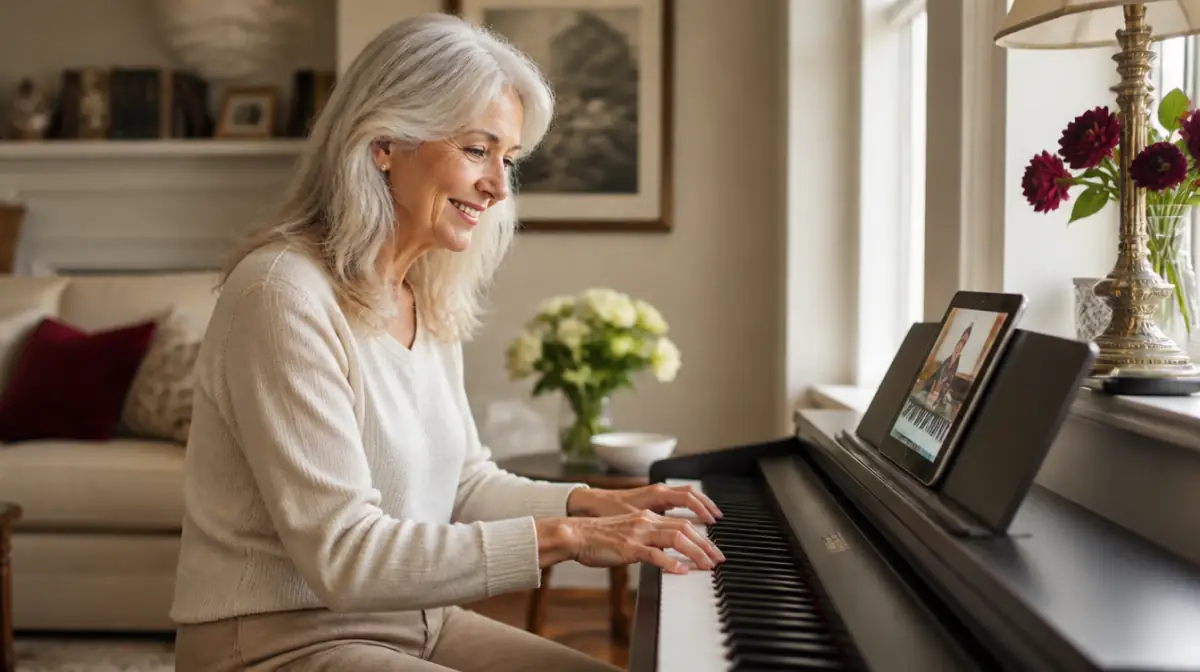
You have wanted to play for years. Maybe you quit lessons at 11, maybe you never had the chance. Now you have a little more time, and one question keeps getting in the way: am I too old for this? No. There is no age cutoff for learning piano. What changes with age is how you learn best, how fast your fingers adapt and what a good first year looks like. This guide covers all three honestly, decade by decade.
The short answer
Adults in their 40s, 50s, 60s, 70s and beyond can learn to play piano for enjoyment; age mostly changes the pace, not the possibility. You will probably not become a concert pianist. You can learn chords, accompany songs, play simple pieces with both hands and enjoy the process.
Adults also bring real advantages: patience, a clear reason to play, music they already love and the ability to understand theory quickly. Children have flexible fingers. Adults have focus.
The question is rarely "am I too old?" It is "will I keep sitting down at the keys?" That part you can plan for.
What to expect at 40, 50, 60 and 70+
Every decade has its own advantages and challenges, and a realistic first-year goal looks a little different for each. These are typical patterns, not promises. Your health, practice habits and goals matter more than the number on your birthday card.
| Age | Advantages | Common challenges | Realistic first-year goals |
|---|---|---|---|
| 40s | Good finger dexterity, strong motivation, often some music background | Little free time, work and family fatigue | Main chords in a few keys, simple accompaniment for songs you like, early hand coordination |
| 50s | Clear goals, patience, more evenings free as kids grow up | Some stiffness, reading glasses at the music stand, self-doubt | Chord-based songs with a steady left hand, a few easy pieces, basic note names |
| 60s | Time to practice daily, no pressure to perform, life experience with learning | Slower coordination at first, joint stiffness, unfamiliar tech | A short set of favorite songs, playing hands together slowly, a calm daily routine |
| 70+ | Practice as a pleasure, not a test; deep musical memory of songs | Arthritis or reduced reach, fatigue, vision, longer sessions feel tiring | Simple chords and melodies, a few songs for family, short sessions you enjoy |
General patterns from adult-learner forums and teacher guidance, summarized October 14, 2026. Individual progress varies widely.
Why adults learn differently, not worse
Children absorb motor skills through repetition; adults learn faster when they understand why something works. That is why chord patterns, simple theory and songs you recognize tend to suit adult beginners. You can see that a C chord is "skip a key, skip a key," and the pattern sticks.
The trade-off is coordination. Your hands may feel clumsy for longer than you expect. That is normal and it does improve with regular practice. Patience with that early clumsiness is a big part of why adults keep going, as we cover in why adults quit piano.
Prefer chords and songs before sheet music? Pianoforall starts with rhythm and chords. $49 one-time at checkout on October 13, 2026, with a 60-day refund window.
See how Pianoforall starts →Paid link · opens the vendor's sales page.
What research says about older adults and piano
Several controlled studies have found cognitive or mood benefits in older adults who took up piano, though the studies are small and results are not uniform. Here are three worth knowing, with links to the source.
- Six months of lessons, ages 60 to 85. In a randomized study of 31 older adults with no musical training, those who had individual piano lessons improved on tests of attention and processing speed compared with a control group (Bugos et al., Aging & Mental Health, 2007).
- Four months of practice, ages 61 to 84. A study of 29 older adults found piano learners improved on an attention test (the Stroop task) and reported better mood and quality of life than a group doing other leisure activities (Seinfeld et al., Frontiers in Psychology, 2013).
- 132 retirees, six months. A larger trial compared piano practice with a music-listening course. Both groups showed some gray-matter and working-memory gains, with little difference between them (Marie et al., NeuroImage: Reports, 2023).
The honest takeaway: engaging with music looks good for older brains, but no study shows piano prevents memory loss or dementia. Play because you want to play. Any brain benefit is a bonus.
Hands, eyes and comfort
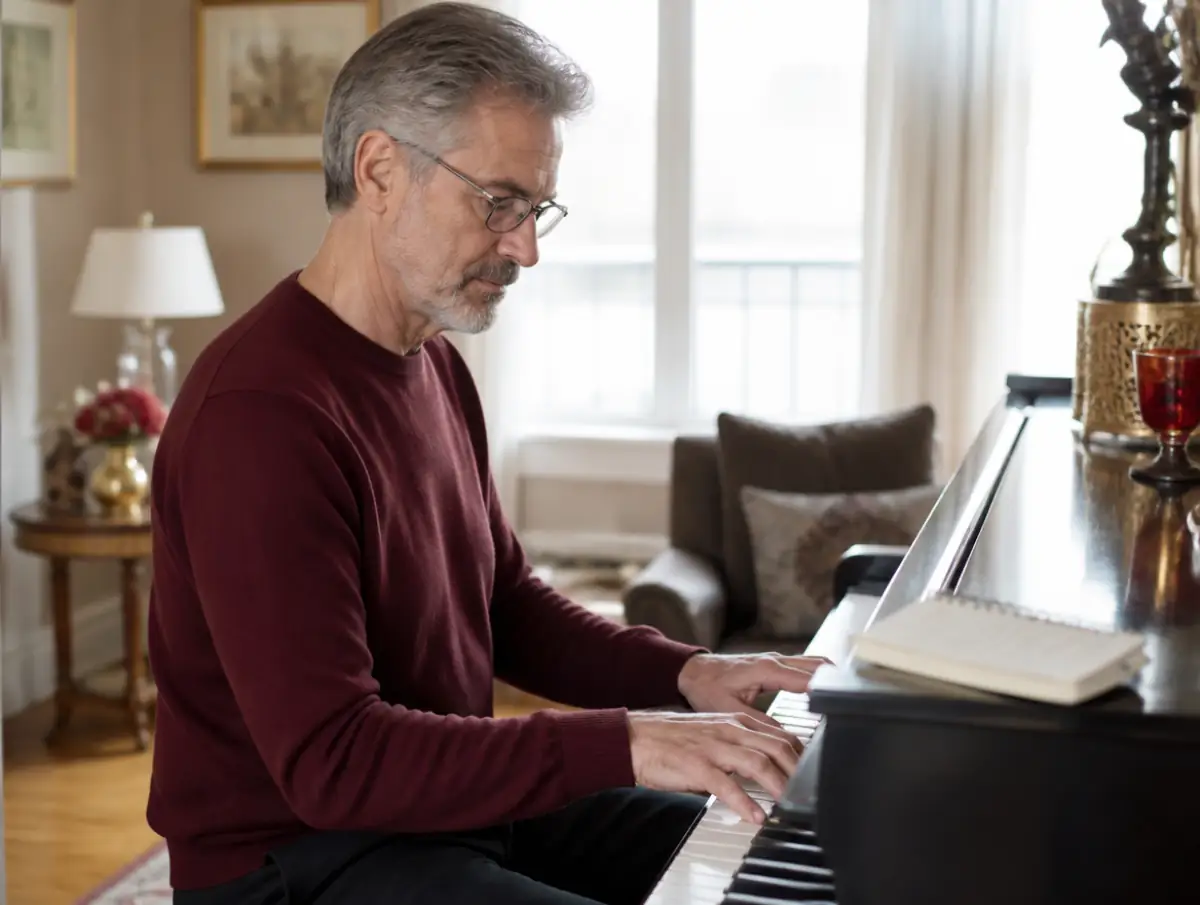
Small setup changes make practice more comfortable at any age; pain is a signal to stop, not to push through.
- Warm up. Run your hands under warm water or gently open and close them before playing.
- Sit right. Bench height so your forearms are about level with the keys, feet flat, shoulders loose.
- Short sessions. Two 10-minute sessions can feel better than one 30-minute stretch.
- See clearly. Use large-print chord sheets or a tablet zoomed in. Ask your eye doctor about glasses for the music-stand distance.
- Lighter keys help. Some digital keyboards let you adjust touch sensitivity. See our beginner keyboard guide.
If you have arthritis, joint pain, numbness or tingling, talk to your doctor before you start and stop playing if anything hurts.
A 15 to 20-minute practice plan
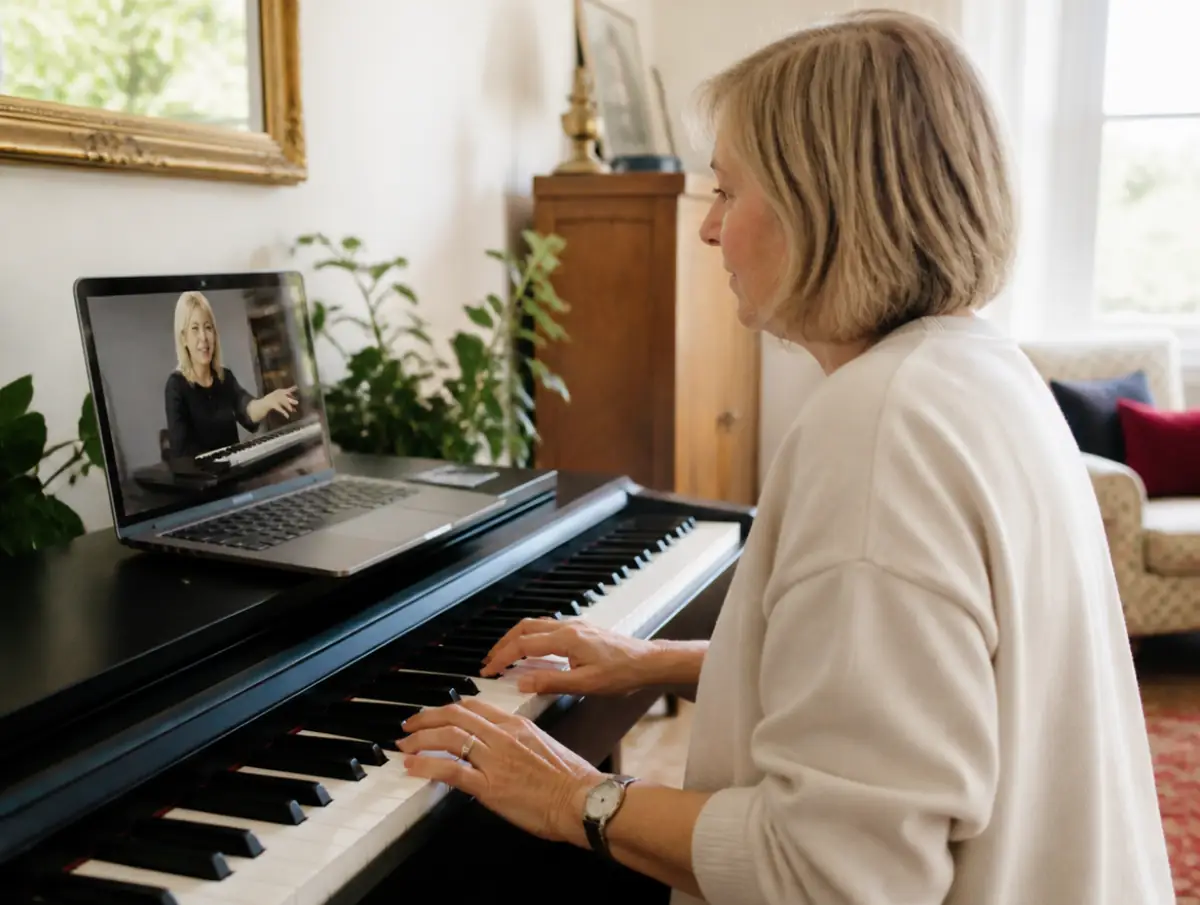
Short, regular practice beats long, rare practice, especially for adult hands. Try this most days:
- 2 minutes: warm-up. Gentle hand stretches, then five fingers on five keys, slowly.
- 5 minutes: chords. Practice a few chord shapes and move between them. Start with our free first three piano chords.
- 5 minutes: rhythm. Add a left-hand bass note under the chords and keep a steady beat.
- 5 to 8 minutes: one song. Something you love, even just the chorus.
Stop while it is still fun. For a fuller plan, read how to learn piano as an adult.
One payment, ebooks with video and audio, works offline on a tablet. Pianoforall was $49 one-time at checkout on October 13, 2026.
Check the current price →Paid link · opens the vendor's sales page.
Choosing a method: teacher, app or chords-first course
The best method is the one that matches your goal, your budget and how much feedback you want. Here is how the three main paths compare for older beginners.
| Method | Best for | Watch out for |
|---|---|---|
| Private teacher | Live feedback on posture and hand position, reading music, classical goals, anyone with hand issues who wants guidance | Weekly cost that varies by city, fixed schedule, some teachers focus on children |
| App that listens (Flowkey, Simply Piano, etc.) | Instant note feedback, game-style motivation, short lessons | Monthly or yearly subscription, small screens, can feel fast or childish to some adults |
| Chords-first course (e.g. Pianoforall) | Playing songs and accompanying singing early, self-paced learners, one payment | No live feedback, reading comes later, you set your own pace |
Many adults combine them, such as a course at home plus a few teacher lessons to check posture. Compare prices in our best online piano courses for adults.
Whatever you pick, expect progress to vary. Some adults play a simple chord-based song within their first weeks; others take longer, and that is fine. We explain the stages in how long it takes to learn piano.
Where Pianoforall fits
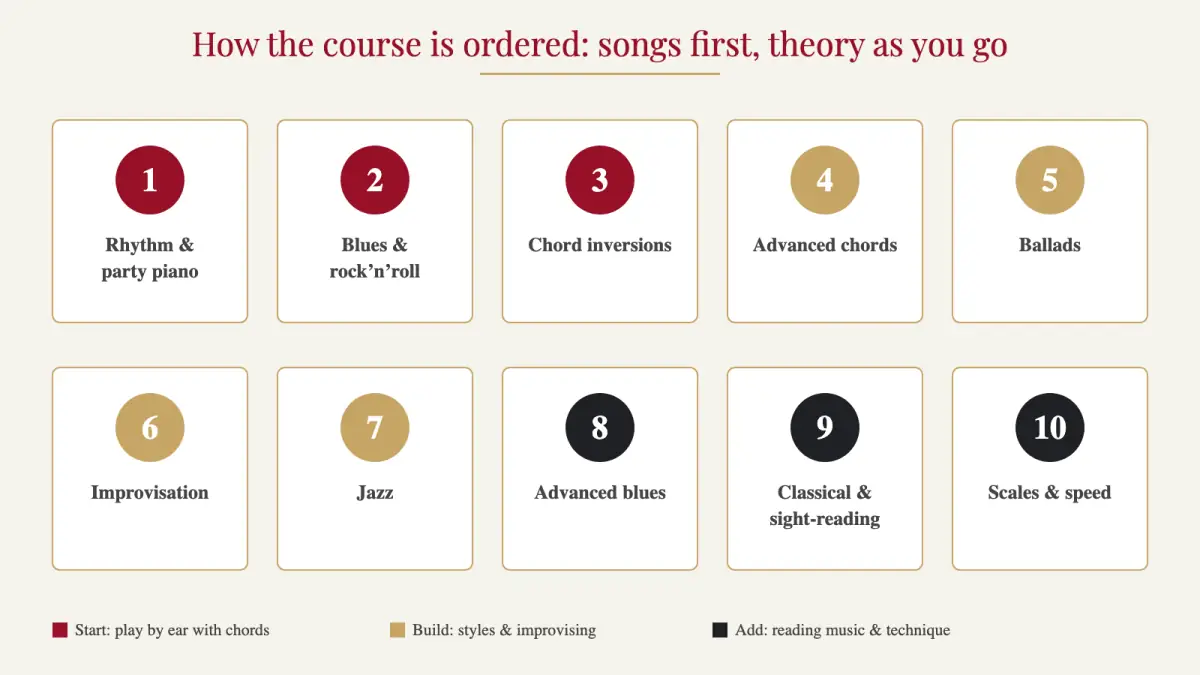
Pianoforall is a chords-first course that suits older beginners who want songs early and prefer one payment over a subscription. It was created by Robin Hall and has been online since 2006, according to the vendor. It comes as 10 ebooks with embedded video and audio; the vendor says about 300 video lessons, though counts vary across its pages.
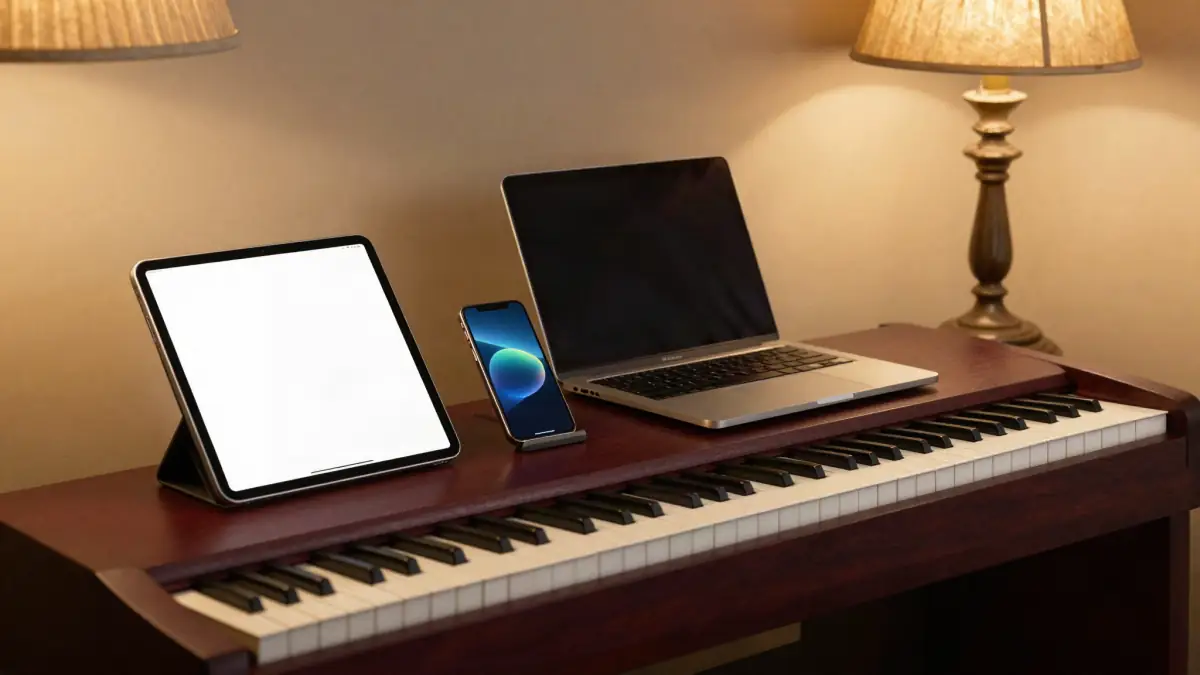
It works on Windows and Android through the free Kotobee Reader, on Mac, iPad and iPhone through Apple Books, and offline. An online player at academy.pianoforall.com has a free "Test Drive" with no card needed, so you can check if the pace and style suit you before paying.
The honest downsides for older learners
Pianoforall is not the right fit for everyone over 50.
- No one watches your hands. There is no teacher feedback and no app that listens. If you have arthritis or past injuries, a few lessons with a teacher are worth it.
- Some tech setup. You download ebooks and open them in a reader app. The Academy player is simpler if downloads feel fiddly.
- Dated look. The videos are older in style, which several reviewers mention.
- Optional upsell. After checkout the vendor offers "Classics By Ear" for $49. You do not need it to start.
Read our full Pianoforall review for more detail.
Not sure about the pace? Try the free Academy Test Drive first, or buy with the 60-day refund window.
Look inside Pianoforall →Paid link · opens the vendor's sales page.
Money-Back
Low risk if it isn't for you
Pianoforall has a 60-day money-back window. You can ask the vendor or go through the retailer (clkbank.com). The vendor says its refund rate has stayed at or below 4% since 2006. Terms checked October 13, 2026.
The bottom line
You are not too old to learn piano. Pick a method that fits how you like to learn, keep sessions short, look after your hands and choose songs you love. Progress comes at its own pace, and the enjoyment starts with the first chord.
Start with chords, play songs early, pay once. Research-based pick, not a hands-on test.
Try the chords-first approach →Paid link · opens the vendor's sales page.
Frequently asked questions
Am I too old to learn piano at 50, 60 or 70?
No. There is no age cutoff. Older adults usually build finger coordination more slowly at first, but they can learn chords, accompany songs and play simple pieces for enjoyment.
How long does it take an older adult to learn piano?
It varies with practice, health and goals, so no honest source can promise a timeline. Short, regular practice of 15 to 20 minutes most days tends to work better than long, rare sessions.
Is learning piano good for the brain in older adults?
Small controlled studies of adults aged 60 to 85 found improvements in attention, processing speed and mood after several months of piano practice. No study shows that piano prevents memory loss or dementia.
Can I learn piano with arthritis?
Many people with arthritis play, but talk to your doctor first. Keep sessions short, warm up gently and stop if anything hurts.
Should an older beginner use a teacher, an app or a course?
A teacher gives live feedback on posture and hands, an app listens and scores your notes for a subscription, and a chords-first course like Pianoforall lets you play songs early for one payment. Many adults combine a course with a few lessons.
Is Pianoforall suitable for seniors?
It suits self-paced learners who want chords and songs first. It was $49 one-time on October 13, 2026, with a 60-day refund window and a free Academy Test Drive. It has no live feedback and a dated look.
More from the blog
Best 5 Online Piano Courses for Adults in 2026
Pianoforall, Pianote, Playground Sessions, Flowkey and Piano Marvel compared on 1-year cost, refunds, by-ear vs reading and devices. Prices Oct 13, 2026.
Play Your First 3 Chords Tonight (C, F, G) in 15 Minutes
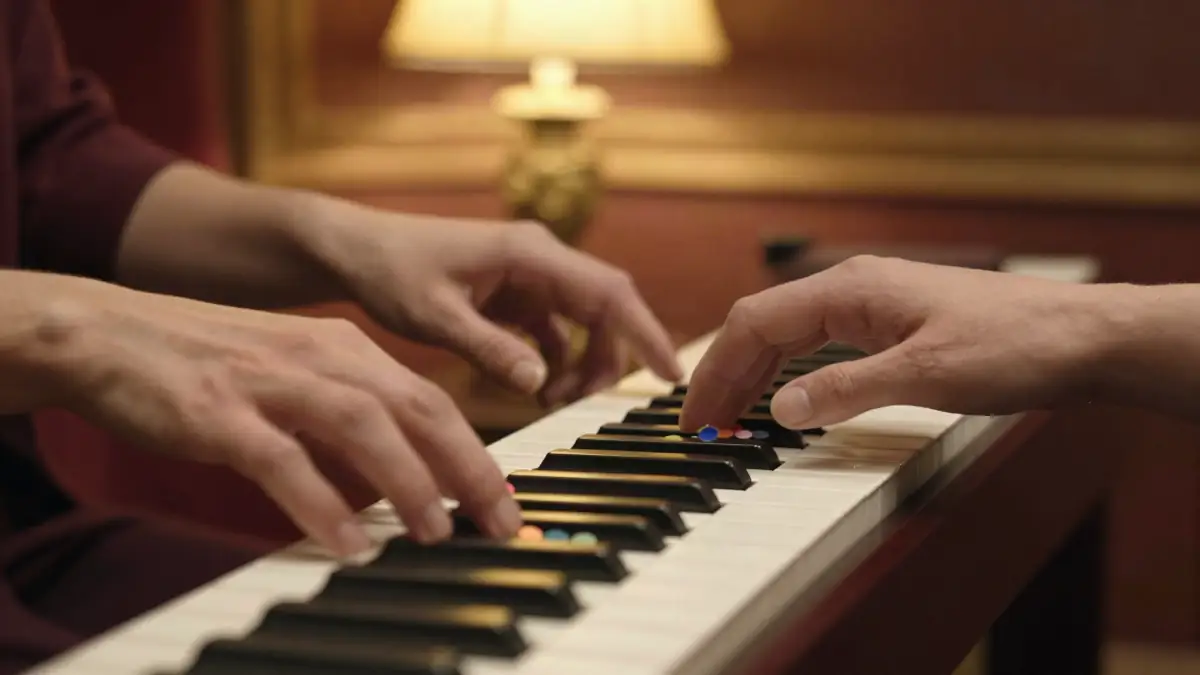
Learn C, F and G piano chords in 15 minutes: find middle C, finger numbers, exact notes, smooth inversions, left-hand bass and a simple rhythm.
Is Pianoforall Worth It? An Honest Buyer's Guide for 2026
Is Pianoforall worth $49? Objections (dated look, no feedback, ebooks, Academy move), price math vs subscriptions, who should skip it, refund steps.